Stand types
Reply within 24 hours
24 hrs telephone support
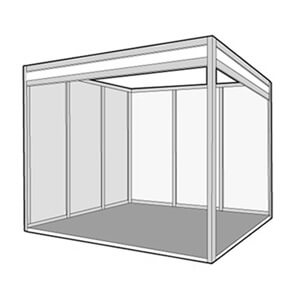
1. Shell Scheme Stands
These stand types are low-budget, low-effort option. Shell scheme stands are provided by trade show organisers. Its design looks like a basic row stand but with no option to customise in any way. Show organisers provide the wall panels, carpeting and a fascia, usually with the company’s name across the top. Rented out in 3x3 meter shell spaces, an exhibitor looking for more space can rent more than one shell space to have a 6x3 space. Why 6x3? This is because these shell spaces are attached to a single back wall which connects them, leading to a fixed floor height.
Row Stands
A row of stands stacked one after the other is a row stand. These stand types share a common wall space between each other. They have one-side open which usually faces the hallway. Depending on your stand designer, you can personalise the flooring, wall panelling and exhibition graphics to suit your needs.

Corner stands
Corner stands are found at the end of row stands. The benefits of corner stands are that they have two entry points, and are placed at the intersection where there is huge flow of traffic. Corner stands allow exposure to your brand on two sides. Exhibitors often use this feature to their benefit by placing an L-shaped banner and multiple display counters, so that can get more visibility at the trade show.
Island stands
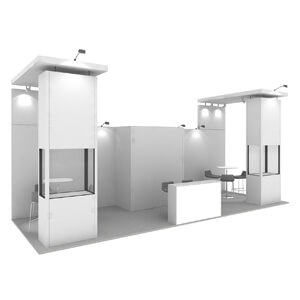
Island stands are the most expensive type, but they make up for it by being the most eye-catching compared to all the other stands. Open on all four sides, it has no walls. Island stands offer plenty of room for building sections such as a lounge room and meeting room. The biggest benefit of an island stand is engagement! Your team can reach out to several guests at the same time. You can also draw the high visibility with a ceiling banner or vertical billboard. . Some stand design ideas we suggest to improve engagement would be photo booths and tablet stand displays that users can use at their leisure